
Leadership maturity shapes how people experience work. It influences trust, morale, and results. A mature leader stays calm during pressure, listens before reacting, and acts with fairness even when it feels hard.
Many people think leadership maturity comes with age or job title. That idea misses the truth. Maturity grows through awareness, reflection, and steady practice. Some young leaders show deep maturity. Some senior leaders still struggle with it.
This article explains leadership maturity in clear terms. You will learn what it is, how it shows up in daily actions, why teams depend on it, and how it connects to modern leadership styles that value people first.
What Is Leadership Maturity?
Leadership maturity is the ability to lead with emotional control, clear judgment, and respect for others. It shows in how leaders respond, not react.
A mature leader:
- Manages emotions under stress
- Takes responsibility for decisions
- Listens to different views
- Acts with fairness and consistency
Leadership maturity focuses on behavior, not authority.
According to research from the Center for Creative Leadership, leaders who manage emotions well are more likely to earn trust and improve team performance. Emotional control remains one of the strongest predictors of leadership success.
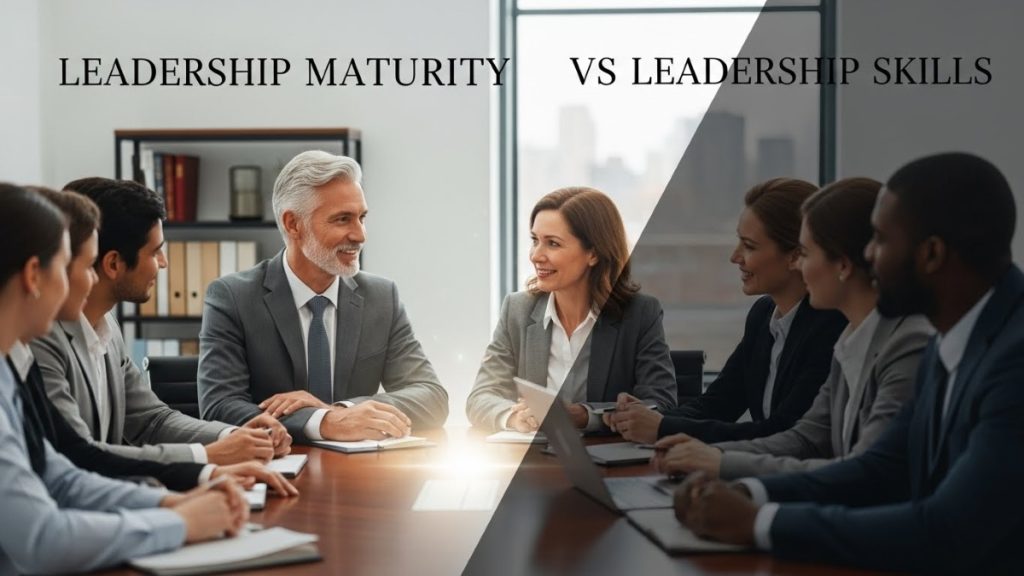
Leadership Maturity vs Leadership Skills
Leadership skills can be learned fast. Maturity takes time.
Skills include:
- Running meetings
- Planning projects
- Giving instructions
Maturity includes:
- Handling conflict calmly
- Admitting mistakes
- Putting team goals before ego
A leader can have strong skills and still lack maturity. Teams feel this gap quickly.
This is why many leadership experts now say development depends more on maturity than technique.
The Core Signs of Leadership Maturity
Emotional Control Under Pressure
Mature leaders pause before speaking. They do not lash out. They manage frustration without blaming others.
This behavior creates safety. Teams speak up more when leaders stay steady.
Accountability Without Deflection
Leadership maturity includes owning outcomes. When things go wrong, mature leaders ask, “What can I learn?” instead of “Who failed?”
This builds trust fast.
Respect for People and Process
Mature leaders treat people with dignity. They do not talk down to others. They respect time, effort, and input.
This aligns with principled leadership, where values guide decisions instead of convenience.
Long-Term Thinking
Immature leadership often seeks quick wins. Mature leadership weighs long-term impact.
This thinking supports distributed leadership, where responsibility spreads across capable team members.
The Stages of Leadership Maturity
Leadership maturity develops in stages. Growth feels uneven and personal.
Stage 1: Reactive Leadership
Leaders react fast and emotionally. Decisions depend on mood or pressure.
Teams feel uncertain at this stage.
Stage 2: Skill-Focused Leadership
Leaders rely on tools and systems. Results improve, but emotional gaps remain.
Conflict still feels personal.
Stage 3: Reflective Leadership
Leaders pause and reflect. They listen more. They seek feedback.
Trust begins to grow.
Stage 4: Grounded Leadership
Leaders act with consistency and calm. Teams feel safe and valued.
This stage supports collective leadership, where success comes from shared ownership.
Why Leadership Maturity Builds Strong Teams
Teams mirror leadership behavior.
When leaders act with maturity:
- Engagement rises
- Conflict resolves faster
- Accountability improves
Gallup reports that teams with emotionally intelligent leaders show up to 21% higher productivity and 59% lower turnover.
Leadership maturity makes space for:
- Participative leadership
- Empowering leadership
- Facilitative leadership practices
Each of these styles depends on trust and emotional steadiness.
Leadership Maturity and Modern Leadership Styles
Leadership maturity acts as the foundation for modern leadership.
- Participative leadership works when leaders listen without defensiveness
- Empowering leadership thrives when leaders trust others
- Authentic leadership requires self-awareness and honesty
- Positivity in leadership grows when leaders manage stress well
- Gratitude in leadership flows when leaders value people beyond results
Without maturity, these styles collapse into performance acts.
How Leadership Maturity Develops Over Time
Leadership maturity grows through experience and reflection.
Key growth drivers include:
- Feedback from peers and teams
- Facing difficult conversations
- Learning from failure
- Practicing emotional awareness
Growth feels uncomfortable at times. That discomfort signals learning.
Leaders who commit to reflection develop steadier judgment and stronger presence.
Simple Self-Check: Are You Growing in Leadership Maturity?
Ask yourself:
- Do I pause before responding when stressed?
- Do I listen fully before deciding?
- Do I admit mistakes without excuses?
- Do people feel safe sharing ideas with me?
Honest answers reveal growth areas.
Common Myths About Leadership Maturity
Myth 1: Maturity Comes With Age
Reality: Growth comes from reflection, not years.
Myth 2: Calm Leaders Are Weak
Reality: Emotional control shows strength.
Myth 3: Authority Equals Maturity
Reality: Respect earns influence, not titles.
FAQs About Leadership Maturity
Leadership maturity means leading with calm judgment, emotional control, and respect for others.
Yes. It develops through reflection, feedback, and experience.
Immature behavior creates fear, confusion, and low trust.
It improves engagement, retention, and decision quality.
Yes. Emotional awareness plays a central role in mature leadership behavior.
Final Thoughts: Leadership Maturity Shapes Lasting Influence
Leadership maturity decides whether people follow out of fear or respect. It shapes culture more than policies ever will.
Mature leaders create space for others to grow. They lead with calm, fairness, and purpose. They support modern leadership styles that value people, trust, and shared responsibility.
Call to Action
If this article helped you reflect on your leadership growth, explore related guides on modern leadership styles, empowering leadership, and gratitude in leadership to deepen your impact.
Share your thoughts in the comments or pass this article to a leader who wants to grow with purpose.

Education & Teaching›Schools & Teaching›Education Theory
Servant Leadership Works: Ethical, Engaging, and Effective
By Dennis Ondrejka
This inspiring guide re-imagines leadership as an act of service rooted in empathy, humility, and purpose. Blending academic insight, personal stories, and practical tools, Servant Leadership equips readers to lead with heart and integrity-whether in the classroom, the boardroom, or everyday life. Drawing on timeless spiritual wisdom and modern research, Thibodeau and Ondrejka show how leading by serving can transform individuals, teams, and entire organizations. This is leadership as it was meant to be: good work, sacred work, our work.
- Faith-driven insights for daily living
- Perfect for families, groups & individuals
- Actionable wisdom & inspiration